
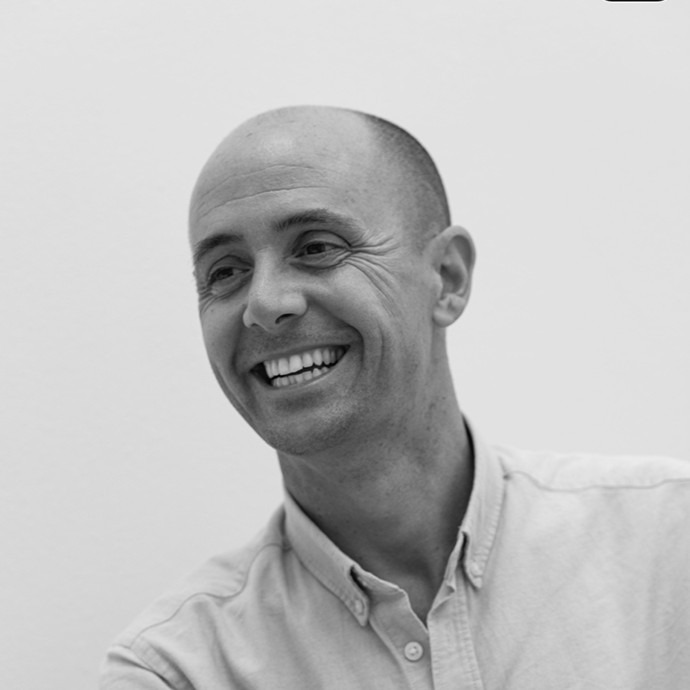
Today we would like to introduce Fibtray®, a start-up working to transform the future of food packaging by reducing plastic use by up to 96% through patented natural fibre technology. We spoke with Pablo G. Monera, CEO of Fibtray®.
What problem does your start-up address and what solution does it offer?
The food sector relies heavily on plastic to ensure the preservation of fresh products such as meat, fish and ready meals in modified atmosphere packaging (MAP). Although cardboard alternatives have been developed, many fail to achieve the required industrial performance or still depend on high percentages of plastic.
Fibtray® tackles this challenge from both a technological and industrial perspective. We have developed a natural fibre tray, patented in more than 30 countries, which replaces up to 96% of plastic while maintaining the necessary barrier properties to preserve the product and ensuring compatibility with existing packaging lines. Our innovation is not only material but also structural and industrial: it enables a realistic, scalable and economically viable transition towards more sustainable solutions within the European regulatory framework (PPWR) and in response to the market’s growing environmental demands.
How and why did you begin this entrepreneurial journey? Any advice, based on your experience, for future entrepreneurs?
Fibtray® was born from a clear reflection: sustainability cannot remain a marketing claim; it must be technically viable and economically scalable. When we realised that the technological capability existed to redesign the tray from its structure rather than simply changing materials, we saw a genuine opportunity to create impact.
My background in the food sector allowed me to understand the pressure faced by manufacturers and retailers: they need sustainable solutions that do not compromise efficiency or cost. That is why at Fibtray® we have committed to a model based on intellectual property and industrial licensing, enabling us to scale without manufacturing directly.
Our advice to future entrepreneurs: deep innovation requires patience, industrial validation and strong strategic partnerships. It is not only about having a good idea, but about turning it into a solution that can be implemented in the real market.
How do you expect the sector to evolve? And what are your expectations for your start-up?
The packaging sector is entering a phase of accelerated transformation driven by regulation, consumer pressure and the ESG strategies of large corporations. The circular economy will cease to be optional.
We believe the future lies in intelligent hybrid solutions: renewable materials combined with efficient barrier technology. It is not about radically replacing everything overnight, but about evolving in a technically sound and responsible way.
At Fibtray®, we aim to establish ourselves as a European benchmark in fibre-based MAP tray solutions through licensing agreements with major industrial groups and international expansion. Our model allows us to scale rapidly and generate impact across multiple markets simultaneously.
Any upcoming developments you would like to share with the wider start-up community?
Fibtray® is progressing with industrial scale-up processes and exploring new applications of our technology for different food segments. In addition, we are strengthening our internationalisation strategy and collaboration with key industrial partners.
We continue to work on cost optimisation and continuous improvement of Fibtray®’s technical performance, with the aim of facilitating large-scale adoption by major retailers and food operators.
In which areas would you like to collaborate with other start-ups, companies or organisations?
At Fibtray®, we are particularly interested in collaborating with:
- Packaging manufacturers interested in licensing sustainable technology.
- Retailers and brands seeking to significantly reduce plastic use.
- Universities and technology centres working on the development of new barrier materials.
- Funds and accelerators specialised in the circular economy and cleantech.
- Start-ups focused on traceability, recyclability or industrial process optimisation.
We firmly believe in open innovation as a catalyst for sector-wide transformation.